Collaborating
Approval Workflows Before a Guide Goes Live
Written By:
Overview
Approval workflows help maintain quality and consistency in documentation. By establishing clear steps for review and sign-off, teams can prevent errors, reduce confusion, and ensure guides reflect current processes.
Why Approval Workflows Are Important
Accuracy: Ensures all information is correct before being shared.
Consistency: Maintains formatting, terminology, and workflow standards.
Accountability: Clearly identifies who is responsible for approving content.
Efficiency: Reduces rework by catching errors before guides go live.
Team Alignment: Confirms all stakeholders have reviewed and agreed on the content.
Steps
Step 1: Define the Approval Process
Decide who must approve a guide before it is published.
This could include:
Subject matter experts
Team leads or managers
Admins responsible for workspace oversight
Determine steps for approval, such as:
Draft completion by the guide creator
Initial review by key teammates for clarity and completeness
Final sign-off by the designated responsible team member or admin
2. Communicate Approval Responsibilities
Inform all approvers of their role and what is expected.
Specify deadlines to avoid bottlenecks.
3. Implement Updates Before Final Approval
Consolidate all feedback into a single list.
Make updates to maintain guide integrity.
Once changes are applied, notify approvers for a final check.
4. Confirm Approval and Go Live
The responsible team member or designated approver confirms that the guide meets all requirements.
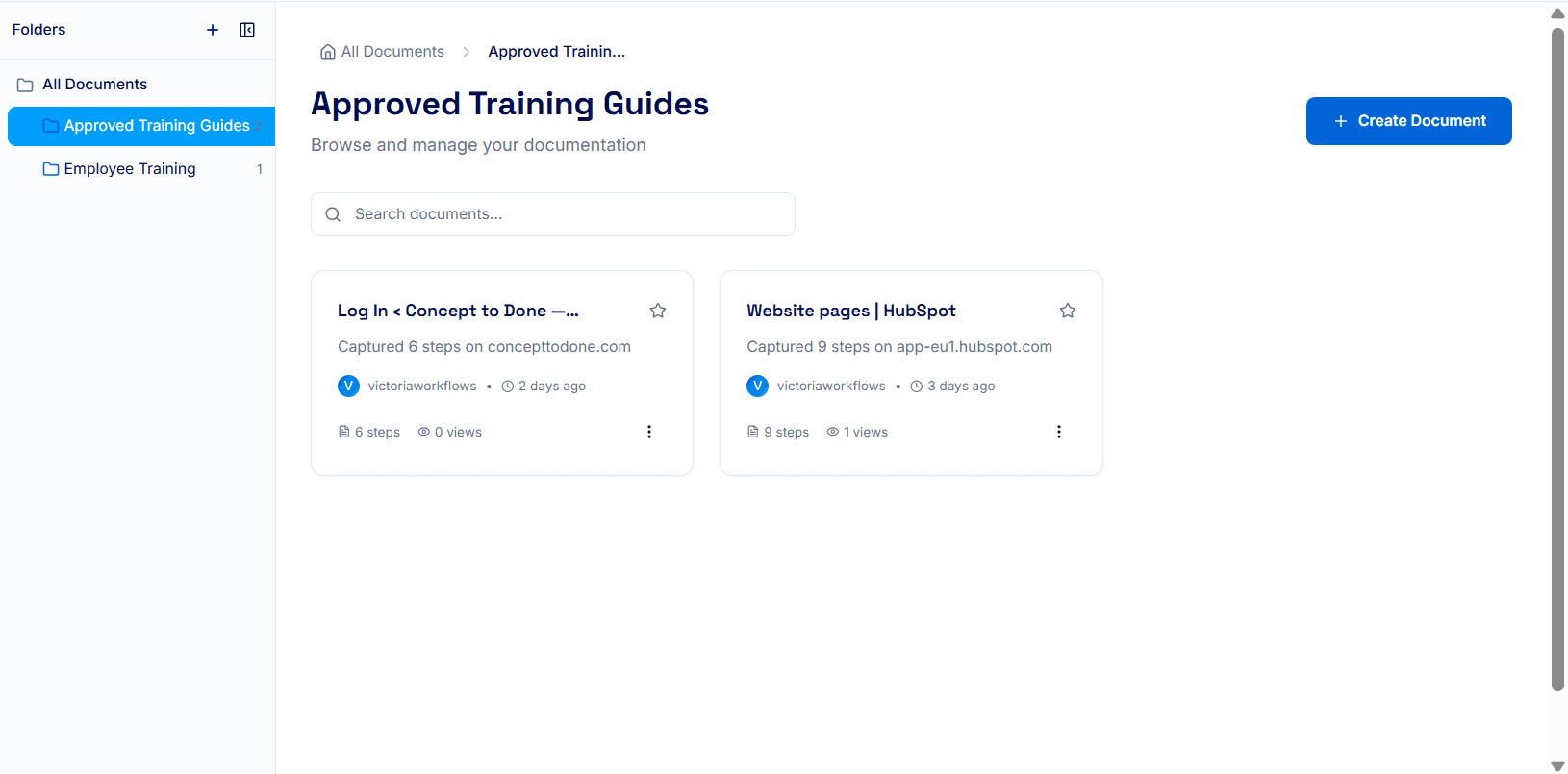
Move the guide to a finalized folder in DocuFast.
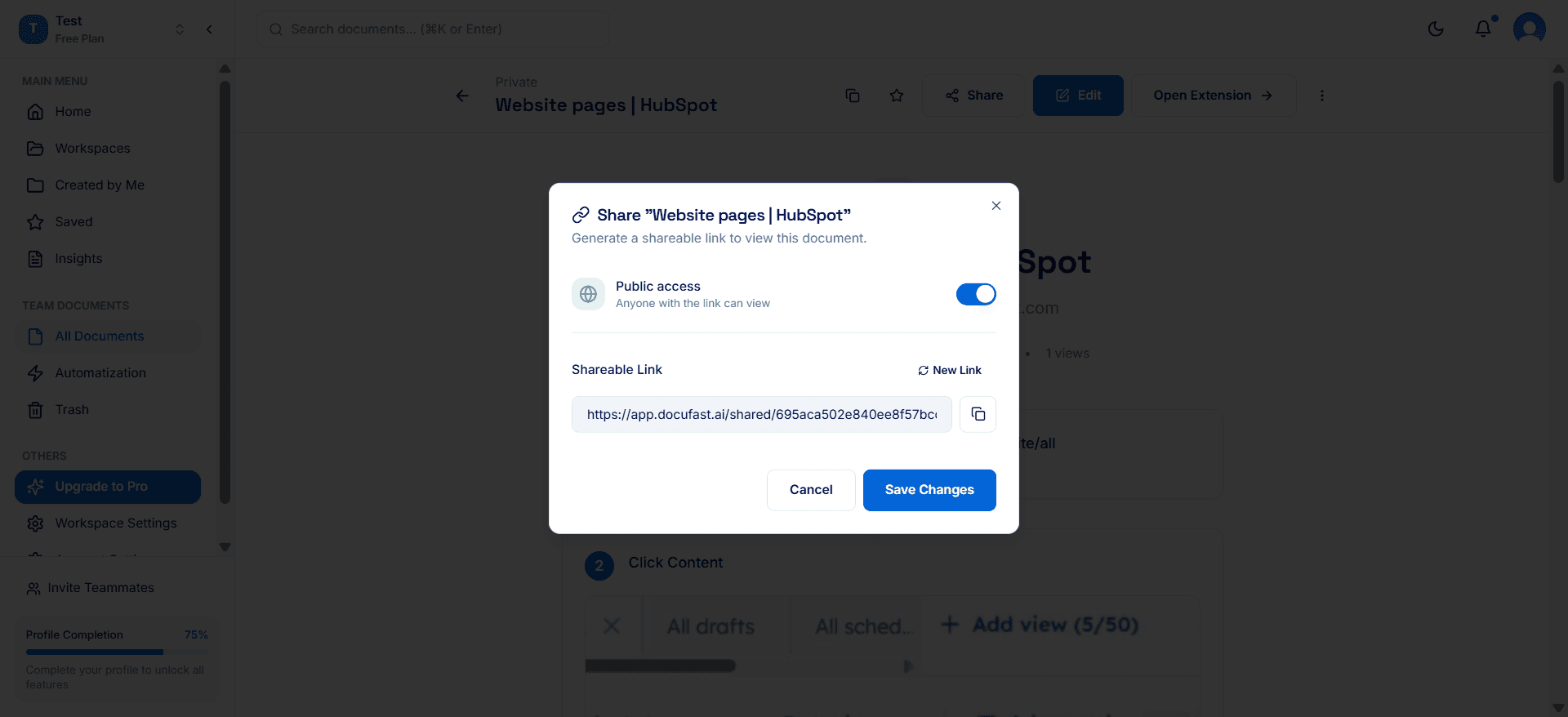
Communicate to the team that the guide is live and available for reference.
Tips:
Standardize the approval workflow for all guides to reduce confusion.
Keep a simple tracking sheet or checklist for approvals.
Encourage approvers to provide clear, actionable feedback.
